Black Travel Club · Know before you go
Senegal: Black Heritage & Living Culture
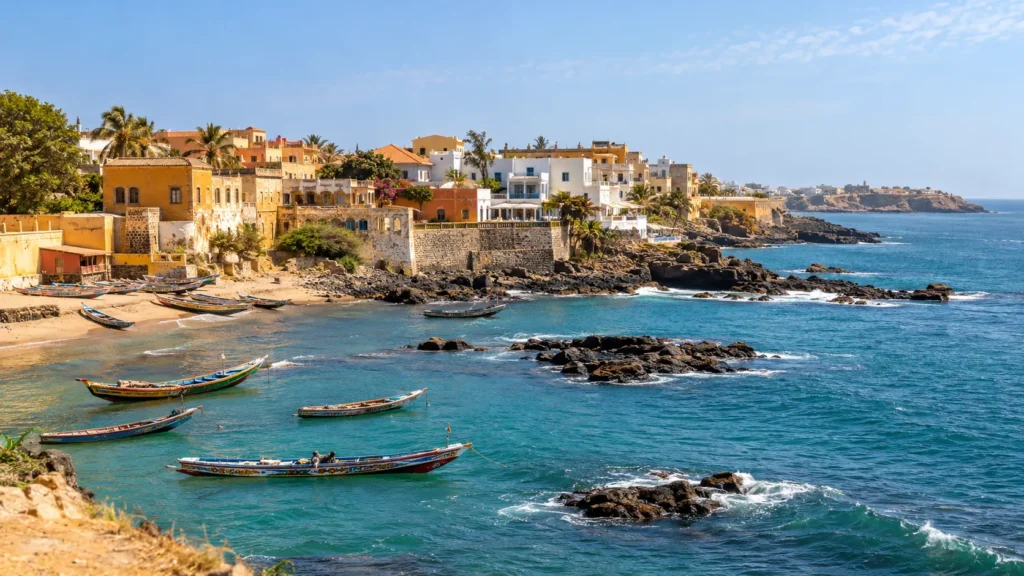
West Africa · History & living culture
An island of memory. A country beyond it.
Visit Gorée with care, then give equal attention to the people and cultural life of present-day Senegal.
Start here · Black history
Gorée: learning to read a place of memory
Understand why Gorée matters to diaspora remembrance while learning to distinguish a memorial’s meaning from a claim about the number or identity of people transported.
Two things to know before you go
Read the whole island
UNESCO identifies Gorée’s buildings, streets and fortifications as a landscape associated with the slave trade. Off Dakar, the island connects histories of European competition with the confinement and commodification of African people.
Remembrance is part of the history
UNESCO also recognizes Gorée as a place of diaspora pilgrimage and dialogue. A memorial can carry profound collective meaning without identifying an individual ancestor’s departure point.
Historical reading: UNESCO: Island of Gorée.
Check your understanding: Is a commemorative doorway the same thing as a record of a voyage?
No. A memorial helps people remember and reflect. A voyage claim needs evidence such as shipping or archival records. Ask which kind of claim an interpretation is making.
Turn the reading into a meaningful visit
Before you go. Read one of the historical sources above and choose a question you want to explore.
While you are there. Read the island’s architecture with a local interpreter. Ask how residents and museum workers participate in the telling, rather than treating the island as an empty monument.
After the visit. Talk about one documented fact and one question still open. Learning does not require filling every gap with a dramatic story.
BTC learning suggestions are optional itinerary ideas. Ask about paid local interpretation and how your visit supports the people doing that work. No museum visit, transport or excursion is included unless your booking explicitly lists it.
01 · Historical context
The history beneath the itinerary
The Island of Gorée, off Dakar, is a UNESCO World Heritage site associated with the Atlantic trade in enslaved people. Its houses, fortifications and streets form a landscape of memory. UNESCO also describes the island’s continuing importance as a place of diaspora pilgrimage and intercultural dialogue. Those meanings deserve attention alongside the surviving buildings.
Agency, resistance and remembrance
Memory and historical measurement answer different questions. A commemorative doorway is not a passenger manifest. Ask a guide which claims come from archival records, which concern the wider Atlantic trade, and which describe the island’s role in remembrance. This guide does not assign a number of captives to a particular house or claim a verified ancestral route.
02 · Places to explore
Read the landscape
Island of Gorée
Plan a guided historical visit that considers the island as a whole, including its streets, fortifications and residential life.
Dakar as a base
Keep time outside the island visit for local cultural interpretation and conversation. Ask your advisor to identify suitable locally led experiences.
03 · Culture lives here
Make room for the present
A pilgrimage need not become a performance for the camera. Follow local guidance in memorial spaces and ask permission before photographing people. Purchase interpretation and creative work on terms set by the people providing it.
04 · Plan with care
Put the places in the right itinerary
Gorée is an island excursion from Dakar. Confirm ferry arrangements, mobility requirements and current site access for your dates.
Tell your advisor which history you want to understand, how much time you want for reflection, and any access needs. Ask who will lead the interpretation and what is included in the quoted price. Museum visits and heritage experiences are confirmed only when listed in your booking.
Continue reading
Sources & further learning
Black history learning sections reviewed October 23, 2026; earlier historical summaries reviewed October 18, 2026. Travel suggestions and reflection questions are BTC editorial guidance. Sources may differ in terminology and emphasis. Opening arrangements and excursion availability need current confirmation.