Black Travel Club · Know before you go
Brazil: Black Heritage & Living Culture
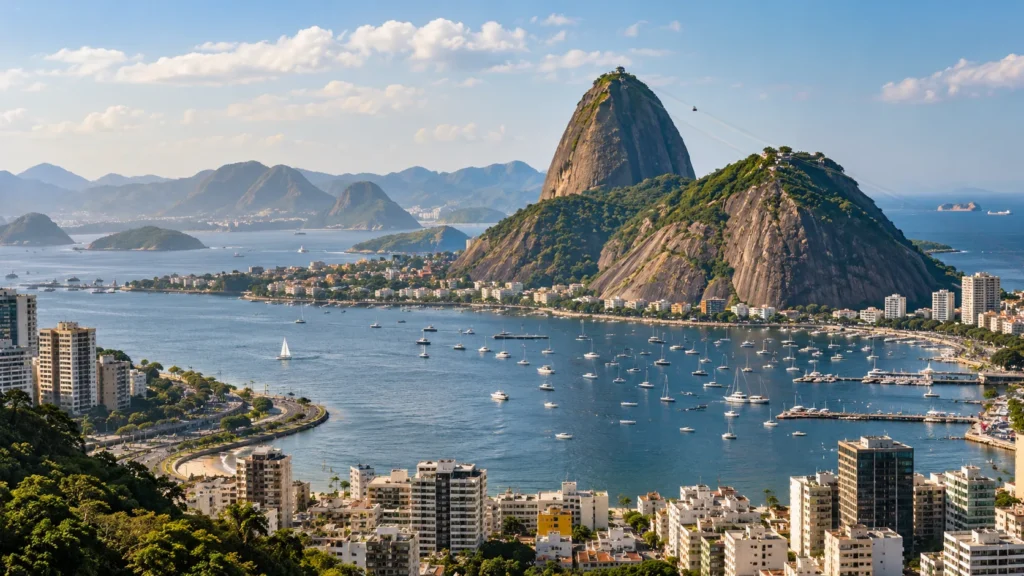
The Americas · History & living culture
A landing place. An enduring memory.
At Rio’s Valongo Wharf, begin with the people forced ashore and the communities who continue to care for their memory.
Start here · Black history
Rio: restore people to the story of the waterfront
Understand why Valongo is a place of conscience. Connect archaeological evidence with the people brought ashore and the communities sustaining Afro-Brazilian memory today.
Two things to know before you go
1811: a landing place built for the trade
UNESCO identifies Valongo Wharf in Rio de Janeiro as a landing place for enslaved Africans, built from 1811. Its estimate of up to 900,000 arrivals describes the scale of forced movement, not a complete list of named individuals.
Archaeology and living memory meet
UNESCO describes both the wharf’s surviving archaeological layers and continuing expressions of African heritage nearby. The story therefore includes the work of remembrance, not only the violence of arrival.
Historical reading: UNESCO: Valongo Wharf Archaeological Site.
Check your understanding: Can an estimated total tell us everything about the people who arrived?
No. Numbers help establish scale. Archives, archaeology and community interpretation answer different questions about lives, names and remembrance; none should be mistaken for a complete record.
Turn the reading into a meaningful visit
Before you go. Read one of the historical sources above and choose a question you want to explore.
While you are there. Ask about Afro-Brazilian-led interpretation around Valongo and how it connects the remains with the surrounding community. Confirm arrangements without assuming an included excursion.
After the visit. Reflect on who preserves the site’s memory today and how a visitor can support that work respectfully.
BTC learning suggestions are optional itinerary ideas. Ask about paid local interpretation and how your visit supports the people doing that work. No museum visit, transport or excursion is included unless your booking explicitly lists it.
01 · Historical context
The history beneath the itinerary
Valongo Wharf in central Rio de Janeiro was built from 1811 as a landing place for enslaved Africans. UNESCO recognizes its surviving archaeological fabric and the profound significance of the site for the African diaspora. The exposed remains are fragments, not a reconstructed port. Their relationship with the present shoreline has changed through later land reclamation.
Agency, resistance and remembrance
The history did not end when the wharf was covered. UNESCO describes the role of African-Brazilian communities in caring for the site and sustaining commemorative practices after its rediscovery. Ask how archaeology, spiritual meaning and neighbourhood life meet here. The ability to see a remnant of the landing place does not make the experiences of the people who passed through it fully recoverable.
02 · Places to explore
Read the landscape
Valongo Wharf Archaeological Site, Rio
Use qualified interpretation to understand what survives, what is buried and how the wider port landscape changed.
The surrounding memory landscape
Ask for a locally informed route that respects commemorative spaces and the people who use them.
03 · Culture lives here
Make room for the present
Support interpretation that includes African-Brazilian voices. Keep room for art, conversation and contemporary cultural work without expecting a community to perform either trauma or celebration for visitors on demand.
04 · Plan with care
Put the places in the right itinerary
This guide centres on Rio de Janeiro. Brazil is a large country; a visit to another city does not automatically include Valongo. Confirm city-to-city travel before combining heritage stops.
Tell your advisor which history you want to understand, how much time you want for reflection, and any access needs. Ask who will lead the interpretation and what is included in the quoted price. Museum visits and heritage experiences are confirmed only when listed in your booking.
Continue reading
Sources & further learning
Black history learning sections reviewed October 23, 2026; earlier historical summaries reviewed October 18, 2026. Travel suggestions and reflection questions are BTC editorial guidance. Sources may differ in terminology and emphasis. Opening arrangements and excursion availability need current confirmation.